
2026 HFC Phase-Down Survival Guide for HVAC Contractors
The AIM Act is already here, and if you are an HVAC contractor who hasn’t thought about what the 2026 HFC production cuts mean for your business, this is the guide you need to read before your next supply order.
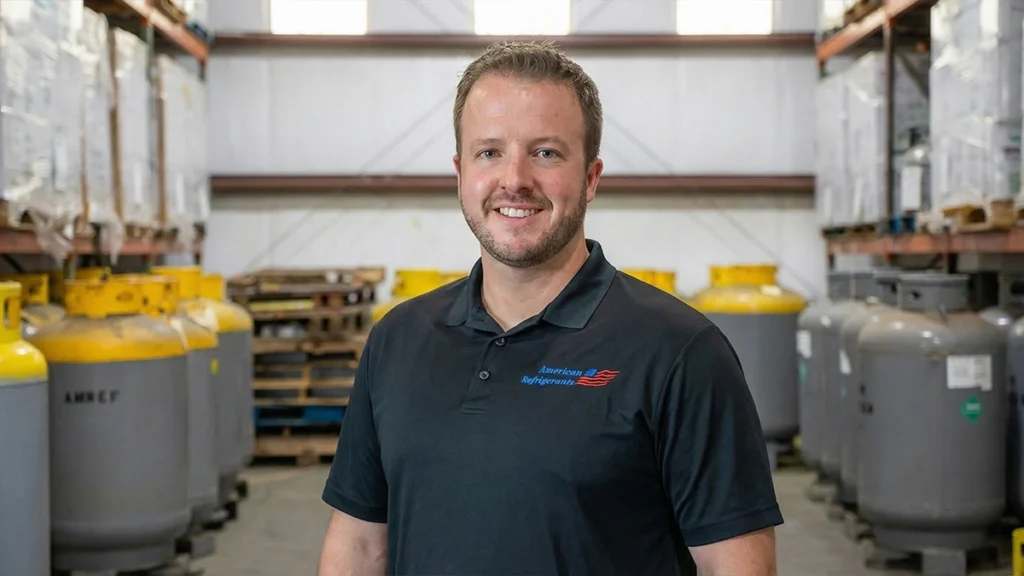
I’m Chris Mussey, owner of American Refrigerants, one of roughly 50 EPA-certified refrigerant reclaimers in the country and a holder of HFC Consumption Allowances. We process, reclaim, and distribute refrigerants from our facility in Bradenton, Florida, to contractors nationwide.
I wrote this guide because the questions I receive every day from techs and business owners show me that there is a massive information gap between what the EPA has mandated and what the average contractor actually understands. This isn’t a policy summary copied from the EPA website; it is a practical guide from someone who is inside the supply chain, watching prices change, fielding calls from panicked business owner.
What is the AIM Act and why should you care in 2026?
The basics: What is actually happening
The American Innovation and Manufacturing (AIM) Act was signed into law in December 2020. It gives the EPA authority to phase down the production and consumption of hydrofluorocarbons (HFCs), the refrigerants that power almost every air conditioning and refrigeration system in the country.
The key word is “phase down,” not “phase out.” The EPA isn’t banning R-410A or R-134a overnight; what is happening is a reduction in the total amount that can be produced or imported each year. Think of it like a pie that is shrinking—the same number of people are trying to eat from it, but the slices are getting smaller and smaller.
The AIM Act phasedown schedule: What the numbers mean
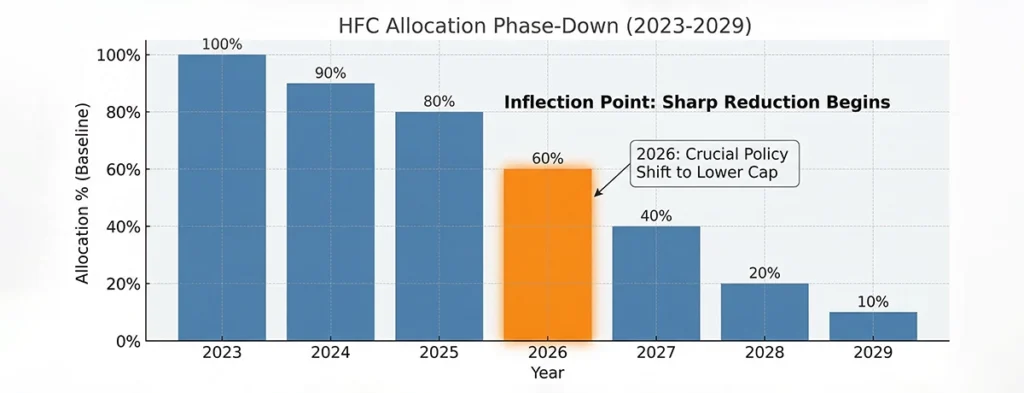
Starting in 2024, HFC production allowances dropped to 60% of the historical baseline (a 40% reduction). This level holds through 2028, and supply chain pressure is already affecting pricing for contractors in real time. R-410A (the gas that is in the majority of residential systems installed in the last 15 years) is the critical point, because when production capacity tightens, prices don’t just inch up—they spike. And if you are buying one or two cylinders at a time from your local supplier, you are paying the highest markup in the chain.
Why most contractors are behind the curve
Here is what I hear every week: “I’ll deal with it when it actually affects me.” The problem? By the time it affects your prices, it is already too late to position yourself ahead. The contractors who are already securing wholesale pricing, establishing buy-back relationships for recovered gas, and creating transition plans for R-454B are the ones who will have stable margins in the third and fourth quarters of this year, while everyone else will be scrambling.
What actually changes for your HVAC business in 2026
The HFC phase-down schedule you need to know
Here is the simplified timeline. Every contractor should have this posted in their shop:
| Year | HFC Allocation | What It Means for Contractors |
|---|---|---|
| 2022-2023 | 90% of Baseline (10% reduction) | Minor reductions begin. Most contractors unaffected. |
| 2024-2028 | 60% of Baseline (40% reduction) | Supply tightens. Price increases begin. Bulk buyers gain advantage. |
| 2029-2033 | 30% of Baseline (70% reduction) | Major price spikes. R-410A becomes a premium product. |
| 2034-2035 | 20% of Baseline (80% reduction) | Era of legacy gas. Reclaimed refrigerant is the lifeline. |
| 2036+ | 15% of Baseline (85% reduction) | Long-term steady state. Reclaimed supply is essential. |
R-410A: The gas everyone uses is about to get expensive
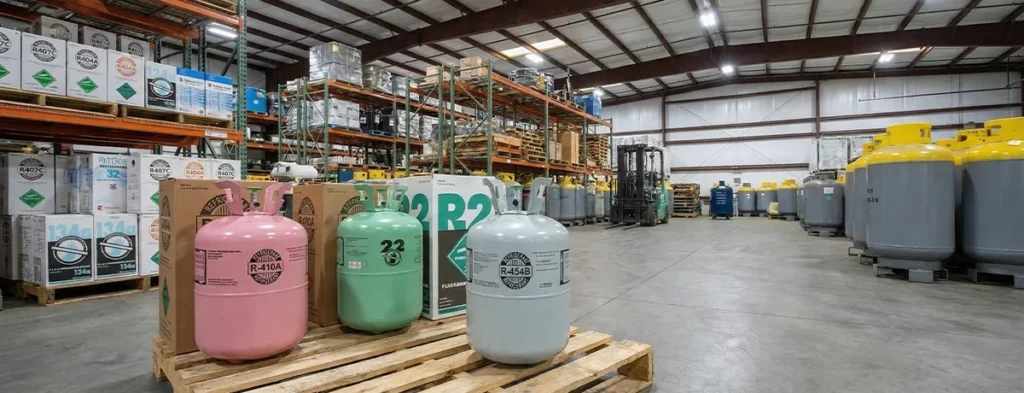
R-410A is the most widely used residential refrigerant in the US. It is in about 90% of the split systems your techs are servicing today, and it is an HFC, which means that, every year, less of it is being manufactured.
The production cuts don’t mean you can’t buy R-410A. You certainly can, but you must remember that you are competing with every other contractor, OEM, and distributor for a shrinking supply. That is where price discipline matters, and where buying from an EPA-certified reclaimer instead of paying the supplier’s markup starts saving you real money.
R-454B: The A2L replacement is coming, ready or not
R-454B is the designated replacement for R-410A in new equipment. It is classified as A2L, which means “mildly flammable.” New systems shipped after January 2025 use R-454B, but the installed base of R-410A systems will need maintenance for the next 15–20 years.
You need a reliable supply of R-410A for existing systems and access to R-454B for new installations, which means you will be working with both gases for a long time. Contractors who establish both supply channels now won’t be caught off guard when a distributor runs out of stock of either one.
R-22: The rare gas that still makes money for contractors
R-22 has not been manufactured in the US since 2020, and every pound of it on the market is reclaimed or imported from old stock. If you are still servicing R-22 systems (and many commercial chillers still run on it), the recovery and reclamation path is your only legal supply option, besides being a revenue opportunity: recovered R-22, even mixed or contaminated, has significant value when sold to an EPA-certified reclaimer who can separate and process it.
Your 5-step AIM Act survival strategy for 2026
Compliance is about positioning your company so that the AIM Act works in your favor, not against you. Here is the action plan
Step 1: Audit your current refrigerant inventory and usage
Pull your purchase records from the last 12 months. How many pounds of R-410A are you buying per quarter? What about R-22 for legacy systems? How much recovered gas do you have sitting in your shop right now? Knowing your numbers is the foundation. You cannot negotiate better prices, plan transitions, or monetize recovered gas if you don’t know what you are dealing with.
Step 2: Stop paying the supplier’s markup
Major supply houses have their purpose—they are convenient for capacitors and copper—but their refrigerant prices reflect a retail markup that eats your profits. By buying directly from an EPA-certified reclaimer or wholesale distributor, you eliminate the middleman. We see contractors saving $1,500 to $2,000 per month just by splitting their purchases: parts from the supplier, gas from the source.
Step 3: Turn recovered refrigerant into revenue
Every recovery cylinder sitting in your shop is money waiting to be collected. R-22, R-410A, R-134a, even mixed or contaminated gas—an EPA-certified reclaimer will buy it. Many contractors don’t realize they can sell recovered refrigerant, and others have been burned by brokers who pay slowly and sit on checks for 60 or 90 days.
We pay within 30 days or less. No waiting 60 to 120 days for a check. We issue the check and send it fast because that is how we would want to be treated. And we accept mixed gas, including R-22 blends that most buyers won’t touch, because we have the separation technology to process it.
Step 4: Build your transition plan for R-454B
New equipment using R-454B is already being shipped. After all, your techs need A2L safety training, your shop needs updated handling protocols, and your supply chain needs to include R-454B in large quantities. Don’t wait until the first job requires it and you are scrambling. Establish a supply relationship for R-454B now to be ready when the calls start coming in.
Step 5: Partner with an EPA-certified reclaimer, not just a distributor
This is the step most contractors ignore, and it is what matters most in the long term. A distributor sells gas to you; a reclaimer is your partner in the supply chain. We buy your recovered gas, reclaim it to AHRI 700 standards, and sell the certified product back to you at wholesale prices. This is a closed loop that protects your margins in both directions, which means you are earning revenue from recovered gas and paying less for what you need.
American Refrigerants is one of approximately 50 EPA-certified reclaimers in the United States. We have HFC Consumption Allowances granted by the federal government, which is a regulatory status that means we can import, process, and distribute at a level that most competitors simply cannot.
Frequently Asked Questions About HFC Phasedown and Refrigerant Separation
We get these questions daily from HVAC contractors, facility managers, and distributors. If your question isn’t answered here, call us at (941) 371-0300 or fill out the form below — we respond within one business day.
What exactly does the AIM Act do to refrigerant prices?
The AIM Act reduces HFC production, which decreases the total supply available—that is, when supply shrinks and demand remains stable, prices increase. The effect on price depends on the specific refrigerant: R-410A is expected to suffer the most drastic increases because it is the most widely used HFC in residential HVAC. Contractors who buy at retail from suppliers will feel the impact first and hardest.
Can I still buy R-410A in 2026?
Absolutely. R-410A will continue to be produced an imported into the 2030s, however, reclaimed R-410A will be an increasingly important part of the market and production and imports are reduced.
Is reclaimed refrigerant as good as virgin?
By law, reclaimed refrigerants must meet or exceed virgin refrigerant standards (AHRI 700). Every batch we reclaim is certified by an independent laboratory for purity, moisture, non-condensables, particulates, oil and acidity. You can feel confident that reclaimed refrigerant is as good, or better, than virgin material.
What should I do with mixed or contaminated refrigerant?
Many mixed refrigerants, particularly R-22 and R-134a, often have value. Even if a blend cannot be separated, we will take the refrigerant at no cost to you.
How quickly does American Refrigerants pay for recovered refrigerant?
American Refrigerants pays within 30 days or less of receiving recovered refrigerants. We do not make you wait 60 to 120 days for payment.
Do you ship nationwide?
We ship to the lower 48 states, usually at no cost to the buyer (volume permitting).
Ready to get ahead of the AIM Act?
If you need to buy refrigerant at wholesale prices or sell your recovered gas for the best price, American Refrigerants is your direct line to an EPA-certified reclaimer—no supplier markup, no 90-day wait for payment. Just fast, fair, and certified.